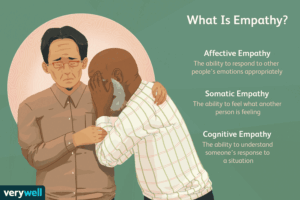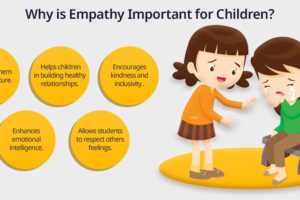







In behaviour science, empathy is formally conceptualised as a complex, multi-dimensional construct that serves as a cognitive and emotional bridge connecting individuals and promoting prosocial behaviour. It enables people to accurately recognise, comprehend, and share the emotional states of others, motivating care and coordinated action.
“Empathy in behavioural science reveals the emotional patterns behind human decisions.”
Behaviour science research distinguishes between two complementary pathways. Cognitive empathy involves accurately recognising and understanding others’ emotional states through mental processes. Affective empathy involves actually sharing another’s emotional state—feeling with them. These two dimensions recruit distinct neural circuits and have different developmental trajectories and behavioural consequences.
Research confirms a moderately strong correlation between empathy and altruistic behaviour. Empathetic arousal interpreted as personal distress promotes egoistically motivated helping aimed at relieving one’s own discomfort. Empathetic concern produces truly altruistic motivation focused on improving the other’s welfare. Recent studies show empathy can be conditioned through emotional rewards, strengthening empathetic feelings through learned associations.
Empathy transforms behavioural science from observation into meaningful insight.”
Empathy in behaviour science represents a fundamental mechanism translating genetic prosocial predispositions into action—operating through distinct cognitive and affective channels that together enable the understanding, sharing, and compassionate response defining our capacity for connection. response that defines our species’ capacity for connection.