





Empathy in social psychology is the scientific study of how individuals perceive, understand, and respond to the emotions and experiences of others. It is considered a fundamental mechanism underlying human social interaction, cooperation, and prosocial behaviour. This capacity is essential for navigating complex social environments and maintaining interpersonal bonds.
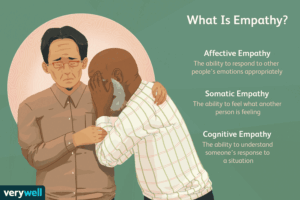
Social psychology conceptualises empathy as a multifaceted construct involving both emotional and cognitive components.
- Emotional empathy includes phenomena like emotional contagion (automatically “catching” others’ feelings), personal distress (self-focused anxiety in response to another’s suffering), and empathic concern (other-oriented feelings of compassion).
- Cognitive empathy, often called perspective-taking, involves intellectually understanding another’s point of view. Researchers distinguish these components because they have different neurological bases and behavioural consequences.
What makes empathy in social psychology fascinating is its role in explaining human behaviour. Empathic concern consistently predicts helping behaviours, even when helping requires personal sacrifice. However, personal distress can either motivate helping or lead to avoidance. Another compelling aspect is empathy’s limits—people often feel more empathy for those similar to themselves, and excessive empathy can lead to guilt or self-destructive giving. Recent research reveals that empathy-related social closeness is learned through reinforcement mechanisms involving specific brain regions.
Empathy in social psychology reveals that understanding others is both a cognitive achievement and an emotional connection, one that shapes everything from momentary helping decisions to the formation of stable social bonds. As researchers note, empathy is the glue that holds relationships and societies together.