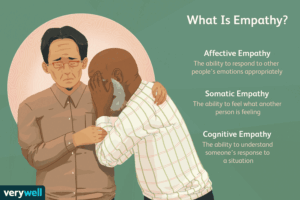







Empathy in friendship is the capacity to understand, share, and respond to a friend’s emotional world with genuine care. It transforms acquaintances into confidants and casual connections into lasting bonds. Friendship deepens not through shared history alone, but through moments of being truly seen. As author and poet C.S. Lewis observed, “Friendship is born at that moment when one person says to another, ‘What! You too? I thought I was the only one.'”
Empathetic friends practice Active Listening—offering full attention without rushing to fix or advise. They celebrate joys without envy and sit with sorrows without discomfort. They notice what remains unspoken and create space for vulnerability. This mutual understanding builds trust over time. As psychotherapist Esther Perel explains, “Friendship is not about being there only for the highlights. It’s about being present for the mundane and the messy. Empathy is what makes that presence possible.”
What makes empathy in friendship powerful is its reciprocity. When one friend offers understanding, the other feels safe to offer it in return. Another compelling aspect is its role in conflict. Disagreements between friends heal when each feels heard rather than dismissed. Empathy also deepens over time—the longer friends share life, the more intuitively they sense each other’s needs. As philosopher Aristotle noted, “Friendship is a single soul dwelling in two bodies.” Empathy is the breath that keeps the soul alive.
Empathy in friendship transforms companionship into communion. It says, “I see you, I am with you, and you are not alone.” As Lewis concluded, “Friendship is unnecessary, like philosophy, like art. It has no survival value; rather, it is one of those things that give value to survival.” Empathy gives friendship its value.