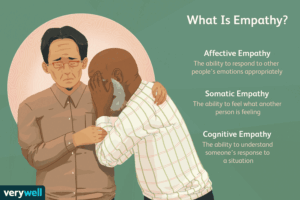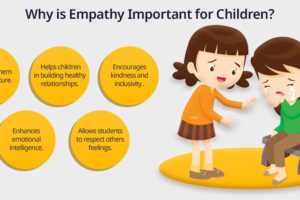






Empathy skills techniques are specific, actionable methods designed to develop and strengthen the capacity to understand, share, and respond to the feelings of others. Empathy is not a fixed trait but a learnable skill that can be cultivated at any point in life through intentional practice. These techniques transform the abstract concept of “being empathic” into concrete behaviours that improve relationships, leadership, and personal well-being.
Effective empathy techniques target multiple dimensions of connection. Among them,
- Active listening involves giving full attention, maintaining eye contact, avoiding interruption, and reflecting what was said to confirm understanding.
- Asking sensitive questions—such as “What’s your experience? How do you see it?”—demonstrates genuine curiosity and willingness to hear another’s perspective without imposing one’s own agenda.
- Validating emotions through phrases like “That must be tough” or “I can see why you feel that way” communicates that feelings are understood and acceptable.
- Perspective-taking involves consciously imagining the world through another’s eyes, focusing on what is significant from their viewpoint rather than how one would react personally.
What makes these techniques particularly compelling is their practical specificity and immediate applicability. Simple verbal tools include
Naming the emotion (“You seem sad”)
Encouraging expression (“Tell me more about how you are feeling”)
Apologising or expressing regret when appropriate (“I’m sorry things haven’t turned out as we wished”)
Nonverbal techniques are equally powerful:
- Comfortable personal space respects boundaries
- Open body language invites connection
- Appropriate touch (like a hand on the shoulder) can communicate shared emotion through neural resonance.
- Even shared silence of 10-20 seconds allows for empathic reflection and processing.
Empathy skills techniques transform good intentions into tangible connection—active listening, validation, perspective-taking, and sensitive questioning create the conditions where others feel genuinely heard, seen, and accompanied, proving that empathy is not merely a feeling but a deliberate practice that deepens with use.