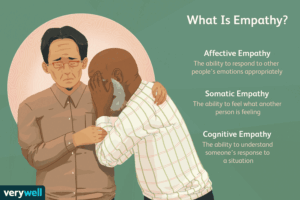






An empathy scale is a measurement tool designed to assess an individual’s capacity for understanding and sharing others’ emotions. These instruments translate the abstract quality of empathy into measurable data. They are used in clinical, research, and educational settings to evaluate social functioning. As psychologist Simon Baron-Cohen explained, empathy has a basis in neurobiology and can be measured.
Several well-established empathy scales exist. The Empathy Quotient (EQ) measures cognitive empathy, emotional empathy, and social skills. The Interpersonal Reactivity Index (IRI) assesses four dimensions, including perspective taking and empathic concern. The Basic Empathy Scale (BES) focuses on affective and cognitive empathy in adolescents. Each uses self-report questionnaires where individuals rate agreement with statements about emotional responses.
What makes empathy scales fascinating is their practical applications. Low scores can signal interpersonal difficulties linked to certain conditions. High scores may indicate risk for internalising problems like anxiety. Scales help clinicians gain insight into social functioning and guide interventions. Recent developments include specialised tools for healthcare professionals and even software engineering contexts.
Empathy scales transform an invisible human quality into measurable data with real-world utility. They remind us that empathy exists on a spectrum and can be assessed, understood, and developed over time.