


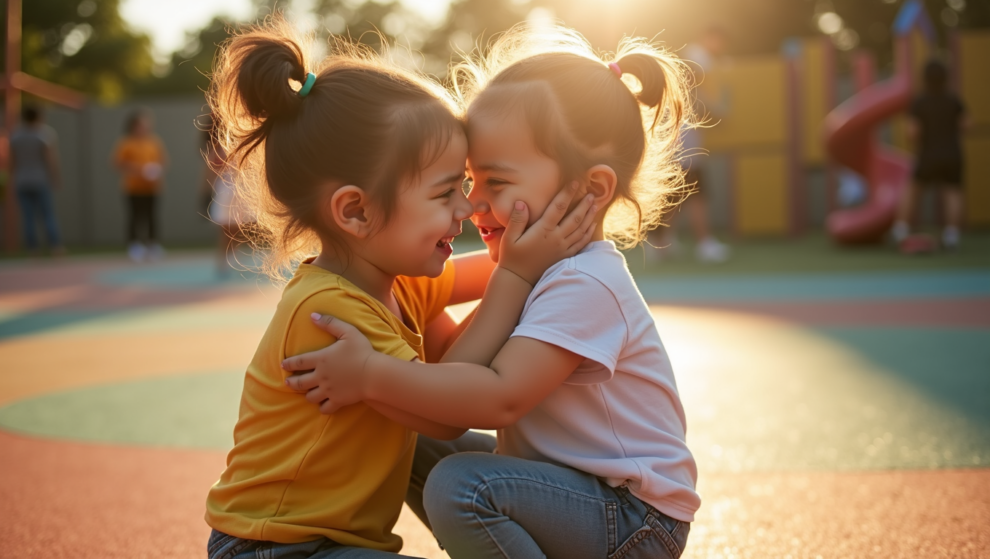


Empathy for kids is the developing capacity of children to recognise, understand, and share the feelings of others. It begins in infancy—when babies cry in response to other babies crying—and continues to unfold throughout childhood. Empathy involves understanding that others have different thoughts and feelings and responding appropriately to their emotional states.
“Teaching empathy to kids helps them grow into kind and caring adults.”
Empathy in children develops through predictable stages. Infants experience emotional contagion. Toddlers around age two realise others have feelings different from their own. As children grow, distinct forms emerge—cognitive empathy enables perspective-taking, affective empathy involves sharing feelings, and empathetic concern adds the desire to help. Parental empathy significantly influences children’s attachment security and emotional development.
What makes empathy in children compelling is how it can be intentionally cultivated. Naming emotions helps children identify feelings. Reading stories and discussing characters builds perspective-taking. Simple tools like feeling charts help younger children recognise emotional states. Role-playing allows safe practice of empathic responses. Most importantly, children learn empathy by watching empathetic adults—modelling kindness teaches more than any lesson.
Empathy for kids is not a fixed trait but a developing capacity that unfolds with support and practice. When children learn to empathise early, it becomes a natural part of who they are—transforming how they relate to others throughout their lives.



