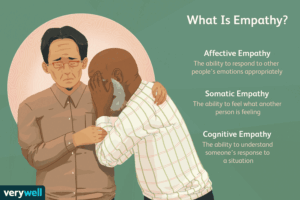






Compassionate empathy is the deepest form of empathy—the ability to understand another’s pain, feel it with them, and then take action to help. It combines cognitive empathy (understanding), emotional empathy (feeling), and the motivation to relieve suffering. As philosopher Martin Buber wrote, “In genuine dialogue, the turning toward the other involves a turning with one’s whole being.” Compassionate empathy is that whole-being response.
This form of empathy moves beyond insight and shared feeling into practical support. It asks not just “I understand” or “I feel you,” but “How can I help?” It fuels acts of kindness, from a comforting embrace to organized relief efforts. Compassionate empathy requires balance—feeling enough to care, but not so much that action becomes impossible. As the Dalai Lama explains, “Compassion is not a relationship between the healer and the wounded. It is a relationship between equals. Compassion becomes real when we recognize our shared humanity.”
What makes compassionate empathy powerful is its transformative potential. It does not stop at awareness but moves toward change. Another compelling aspect is its role in resilient communities. Where compassionate empathy flourishes, people support each other through crisis. As activist and author Parker Palmer observed, “The human soul doesn’t want to be advised or fixed or saved. It simply wants to be witnessed—to be seen, heard, and companioned exactly as it is.” Compassionate empathy offers this witnessing, then adds steady presence.
Compassionate empathy is understanding, feeling, and helping woven together. It sees suffering, shares it, and stays to help. As Buber concluded, “All real living is meeting.” Compassionate empathy meets another in their need and does not look away. their need and does not look away.