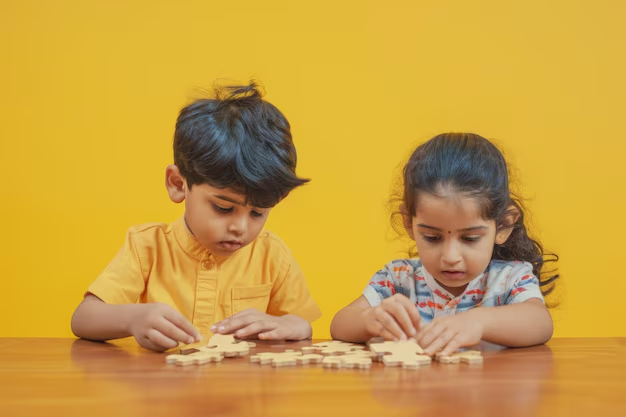


Empathy development in children is the gradual process through which young humans learn to recognise, understand, and respond to the feelings of others. This capacity unfolds naturally but requires nurturing from caregivers and the environment. Empathy does not appear suddenly—it grows in stages. As child psychologist Jean Piaget observed, “The principal goal of education is to create individuals who are capable of doing new things.” Empathy development enables this growth toward connection.
Empathy emerges in predictable stages. Infants experience emotional contagion—crying when others cry. Toddlers begin showing concern, offering a blanket to a distressed playmate. Preschoolers develop perspective-taking, understanding that others have different thoughts and feelings. School-age children demonstrate cognitive empathy, imagining how situations feel from another’s view. Adolescents expand to compassionate empathy, wanting to act on others’ behalf. Each stage builds upon the last. As Dr. Michele Borba explains, “Empathy unfolds like a flower. With the right conditions—safety, modelling, practice—it blossoms fully.”
What makes this development fascinating is how adults can nurture it. Naming emotions helps children identify feelings in themselves and others. Discussing characters in stories builds perspective-taking. Modelling kindness shows empathy in action. Another compelling aspect is the role of play. Imaginative play, especially with diverse peers, strengthens empathic capacity. As psychologist Alison Gopnik notes, “Babies and young children are designed to learn from the people around them. Empathy is caught, not taught—through relationships, not lessons.”
Empathy development in children shapes not only their relationships but the adults they become. Each stage, properly nurtured, builds a more caring human. As Dr. Borba concluded, “Empathy is the cornerstone of our humanity. And its development begins in the earliest years of life.”