





Empathy in business can significantly increase productivity by improving communication, trust, and employee engagement. When leaders understand and respect the feelings and challenges of their employees, it creates a supportive work environment. Employees are more likely to share ideas, report problems early, and work collaboratively without fear of judgment. This openness reduces confusion and delays, allowing tasks and projects to move forward more efficiently. In addition, empathetic leadership boosts motivation and job satisfaction, which directly impacts performance. When employees feel valued and heard, they tend to be more committed to their work and willing to go the extra mile. Empathy also helps managers provide better support, reduce burnout, and assign tasks more effectively based on individual strengths. Over time, this leads to higher productivity, lower turnover, and stronger overall business performance.
“Empathy is about finding echoes of another person in yourself.”
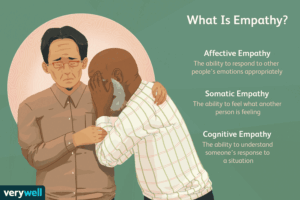
Empathy in business is the practice of understanding and responding to the perspectives, needs, and emotions of employees, customers, and stakeholders. It moves beyond transactions to a genuine human connection. Contrary to outdated beliefs, empathy is not a weakness in business—it is a strategic advantage. As Microsoft CEO Satya Nadella explained, “Empathy is not soft. It’s hard-won. It’s something we have to work at. It’s the ability to perceive the feelings of others and to understand their perspective.”
Empathetic businesses apply this understanding across all operations. With employees, empathy means listening to concerns, offering flexibility, and creating psychologically safe workplaces. With customers, empathy means designing products and services that truly solve problems and communicating with genuine care. With stakeholders, empathy means considering broader impact on communities and society. As leadership expert Simon Sinek notes, “Customers will never love a company until the employees love it first. And employees love companies that treat them like human beings, not resources.”
“People will forget what you said, people will forget what you did, but people will never forget how you made them feel.” — Maya Angelou
What makes empathy in business compelling is its measurable impact. Companies with empathetic cultures report higher employee retention, stronger customer loyalty, and better innovation. Another fascinating aspect is its leadership role. Empathetic leaders build trust that survives a crisis. They attract talent who share human-centred values. As Nadella further observed, “The ability to have empathy for our customers’ unarticulated needs, for our diverse employees who need an inclusive environment—that’s going to be the key differentiator.”
Empathy in business transforms organisations from mechanical systems into human communities. It sees people behind profits and relationships behind transactions. As Sinek concluded, “Leadership is not about being in charge. It is about taking care of those in your charge.” Empathy shows that care.