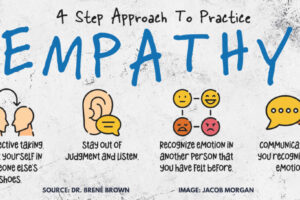


Empathy in romantic relationships is the capacity to understand, share, and sensitively respond to a partner’s inner world—their feelings, thoughts, and experiences. It forms the emotional foundation upon which trust, intimacy, and lasting connection are built. Without empathy, relationships become transactional and fragile. As one clinical psychologist explains, sustained romantic love requires understanding a partner, and such understanding requires empathy. Without it, the bond that defines romantic love cannot sustain.
Relevant Information
Empathy in romantic relationships differs fundamentally from sympathy. Sympathy observes a partner’s suffering from a distance, offering pity while remaining safely outside the experience. Empathy walks alongside the partner, sharing their emotional state while maintaining the healthy boundaries that preserve individual identity. Research confirms that empathy correlates positively with relationship satisfaction. Partners with higher empathy report greater love, stronger connection, and more effective communication. Empathic capacity is influenced by both biology and experience, making it partly innate yet entirely trainable.
Attraction Topics
What makes empathy transformative in relationships is its role during conflict and repair. Arguments de-escalate when partners feel truly understood rather than judged. Empathy enables couples to assume positive intent—interpreting frustrating behavior as arising from care rather than malice. It also builds emotional reserves of goodwill that sustain couples through inevitable challenges. When one partner demonstrates higher empathy, both partners report better relationship quality, creating a virtuous cycle of deepening connection.
Conclusive Sentence
Empathy in romantic relationships transforms partnership from coexistence into communion. It says, “I see you, I am with you, and you are not alone.” Without it, couples may stay together for many reasons, but the deep fusion that defines romantic love will not sustain.
Empathy in romantic relationships is the capacity to understand, share, and sensitively respond to a partner’s inner world—their feelings, thoughts, and experiences. It forms the emotional foundation upon which trust, intimacy, and lasting connection are built. Without empathy, relationships become transactional and fragile. As one clinical psychologist explains, sustained romantic love requires understanding a partner, and such understanding requires empathy. Without it, the bond that defines romantic love cannot be sustained.
Empathy in romantic relationships differs fundamentally from sympathy. Sympathy observes a partner’s suffering from a distance, offering pity while remaining safely outside the experience. Empathy walks alongside the partner, sharing their emotional state while maintaining the healthy boundaries that preserve individual identity. Research confirms that empathy correlates positively with relationship satisfaction. Partners with higher empathy report greater love, stronger connection, and more effective communication. Empathic capacity is influenced by both biology and experience, making it partly innate yet entirely trainable.
What makes empathy transformative in relationships is its role during conflict and repair. Arguments de-escalate when partners feel truly understood rather than judged. Empathy enables couples to assume positive intent—interpreting frustrating behaviour as arising from care rather than malice. It also builds emotional reserves of goodwill that sustain couples through inevitable challenges. When one partner demonstrates higher empathy, both partners report better relationship quality, creating a virtuous cycle of deepening connection.
Empathy in romantic relationships transforms a partnership from coexistence into communion. It says, “I see you, I am with you, and you are not alone.” Without it, couples may stay together for many reasons, but the deep fusion that defines romantic love will not sustain.