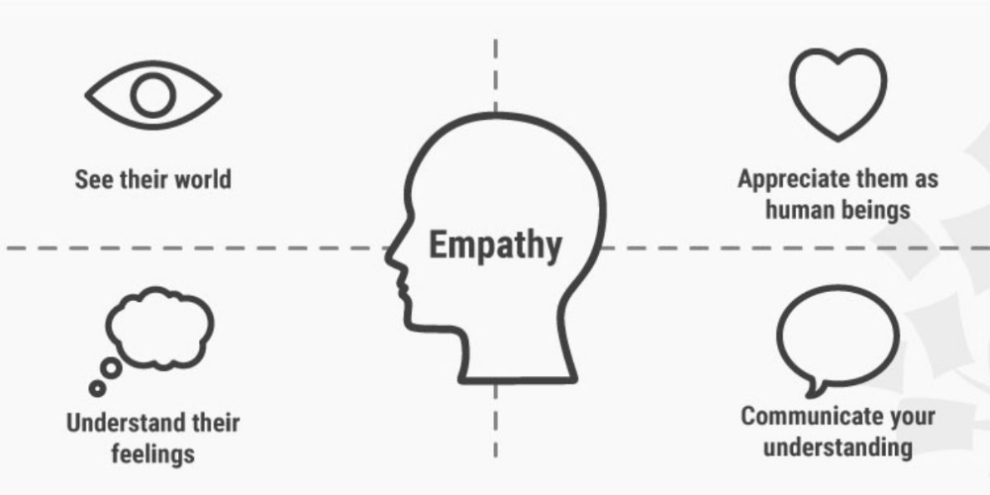


Empathic measurement refers to the systematic quantification of an individual’s capacity to understand and share the emotions and experiences of others. These measurement tools translate the abstract quality of empathy into quantifiable data for clinical, educational, and research purposes. Psychologists distinguish between measurements of situational empathy—empathic reactions in a specific moment—and dispositional empathy, where empathy is understood as a person’s stable character trait.
The field offers numerous validated instruments measuring different aspects of empathy. The 2024 scoping review identified over 500 distinct measures, reflecting the construct’s complexity. Amongst them, the most commonly used measures are mentioned.
- The most widely used include Davis’s Interpersonal Reactivity Index (IRI), a 28-item questionnaire with four subscales assessing perspective taking, empathic concern, personal distress, and fantasy.
- Baron-Cohen’s Empathy Quotient (EQ) measures cognitive empathy, emotional empathy, and social skills, with demonstrated reliability and validity across diverse populations.
- The Questionnaire Measure of Emotional Empathy (QMEE) focuses specifically on affective empathy through seven subcategories.
- Empathy Assessment Index (EAI), more recent instrument that incorporates insights from social cognitive neuroscience and measures dimensions such as self-awareness and emotion regulation.
What makes empathic measurement particularly compelling is its evolution and ongoing refinement. Early instruments like Hogan’s scale used indirect items—questions about shower preferences or singing clubs—that bore questionable semantic relation to empathy. Contemporary measures show stronger content validity. Researchers now distinguish between measurement approaches: self-report questionnaires, physiological measures (heart rate, skin conductance), behavioural observations, and parent-report versions for children. However, challenges persist. Self-reports can be influenced by social desirability bias and limited meta-knowledge about one’s own empathic ability. Cross-cultural adaptation requires careful validation, as demonstrated by studies comparing French IRI versions and evaluating measures in South African children. Recent critiques highlight the need for instruments addressing intersectionality and inter-minority empathy.
Empathic measurement transforms an invisible human quality into quantifiable data with clinical utility for identifying empathy deficits associated with conditions like autism and personality disorders, while also revealing that extremely high levels may contribute to personal distress and internalising problems. These instruments remind us that empathy exists on a spectrum and can be systematically evaluated, understood, and ultimately cultivated across diverse populations.