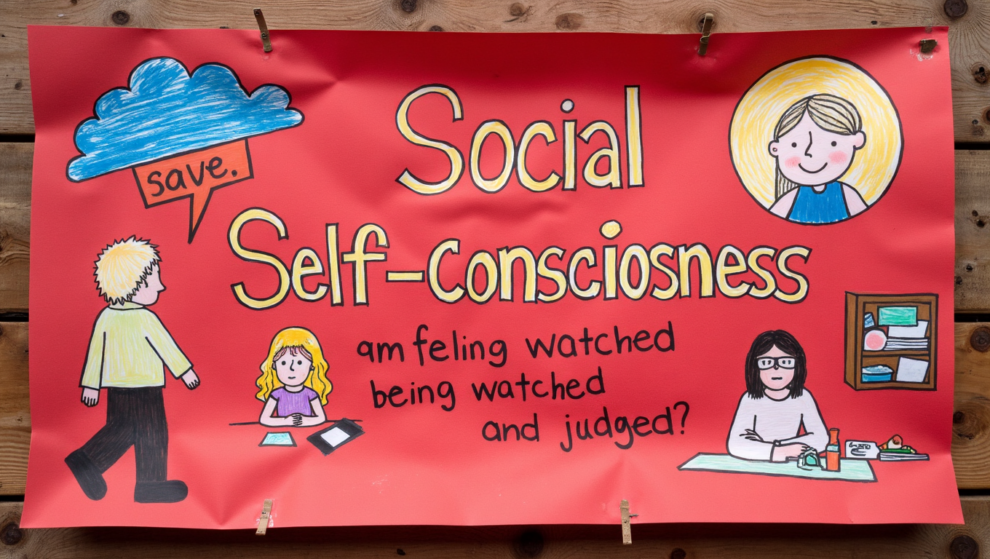


Social self-consciousness refers to heightened awareness of oneself in social interactions, particularly concerning how one behaves, speaks, and is evaluated by others. It reflects sensitivity to social feedback and group dynamics. While a moderate level supports social adaptation and cooperation, excessive social self-consciousness can create discomfort and anxiety in interpersonal situations.
Social self-consciousness develops as individuals learn social norms and begin interpreting others’ reactions. In a balanced form, it enhances communication skills, empathy, and appropriate social behaviour. It encourages individuals to be mindful of tone, body language, and mutual respect, thereby strengthening relationships and social harmony.
However, when intensified, it can lead to fear of negative judgment, embarrassment, or rejection. Individuals may become overly cautious, avoid social gatherings, or struggle with public speaking and group participation. Overanalysing conversations and replaying social interactions can increase stress and reduce confidence. In extreme cases, it may contribute to social anxiety and withdrawal.
Social self-consciousness is closely related to social anxiety, interpersonal communication, peer influence, self-esteem, and identity development. It is particularly relevant during adolescence, in professional networking, and in the context of social media interaction. Cultural expectations and societal standards also shape how social self-consciousness is experienced and expressed.
Social self-consciousness plays an essential role in maintaining social awareness and relational sensitivity. When balanced, it supports effective communication and positive social engagement. However, excessive concern about others’ evaluations can limit confidence and participation. Developing self-acceptance, realistic thinking, and strong communication skills helps maintain healthy social self-consciousness.