
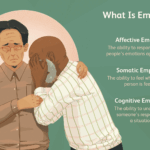







Radical empathy is a concept developed by political scientist Terri Givens that moves beyond simply understanding another person’s feelings to actively working for change. It integrates both emotional empathy—feeling what another feels—and cognitive empathy—understanding how another sees the world—while adding a crucial third dimension: taking action. As defined by the University of Wisconsin-Madison, radical empathy involves “immersing yourself in another’s story without judgement or fear of being judged”.
“Radical empathy means choosing understanding over judgement.”
Radical empathy unfolds through six interconnected steps: cultivating a willingness to be vulnerable, becoming grounded in one’s own identity, opening oneself to others’ experiences, practising empathy consistently, taking concrete action, and ultimately creating change while building trust. It differs fundamentally from conventional empathy by requiring the practitioner to examine the origins of their own biases and internalised oppression. NPR host Ari Shapiro describes it as “an act of radical empathy to attempt to see the world through the eyes of someone else”.
“When radical empathy grows, division begins to fade.”
What makes radical empathy compelling is its transformative power in addressing systemic injustice. It has been applied to racial reconciliation, restorative justice in post-conflict societies such as Germany and South Africa, and community-building for marginalised groups. Laura Hassler of Musicians Without Borders describes radical empathy as “fierce, stubborn, creative, persistent”—a force capable of transcending war and oppression. The concept challenges the “gravitational pull of apathetic helplessness” by insisting that genuine understanding must translate into meaningful action.
Radical empathy transforms empathy from passive feeling into active engagement—not merely walking in another’s shoes, but using that understanding to dismantle the systems that created the need to walk there in the first place.