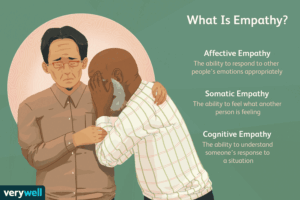





Empath examples illustrate how heightened sensitivity manifests in everyday life. An empath is someone who not only understands others’ emotions but physically and emotionally absorbs them, often blurring the boundary between self and other. Research using experimental phenomenology has identified two distinct empathic structures: self-centred empathic experience (characterised by bodily resonance, self-focused attention, and self-protective motivation) and other-centred empathic experience (featuring bodily resonance, focus on the other’s suffering, and prosocial motivation to help).
Real-World Examples of Empaths
- The Mentorship Connection: A mentor meeting her 15-year-old mentee experienced profound emotional resonance, recognising the mentee’s quiet strength, self-motivation, and hidden achievement of writing a 43-chapter novel. The mentor shifted from wanting to guide to simply “walking alongside” her, offering steady presence rather than instruction. This exemplifies how empaths naturally attune to others’ inner worlds and adapt their responses accordingly.
- The Stranger in the Grocery Store: A mother of a non-verbal autistic child experienced a public meltdown with her son at a checkout line. A woman ahead of her turned with “the gentlest of eyes,” helped unload her cart, paid for her groceries, and walked her to her car in healing silence. She shared, “I have a child with autism, I understand” — not offering pity or advice, but empathetic presence. The mother later reflected, “She did not sympathise with me or show me pity. She offered her empathy”.
- The Heart-Shaped Card: A young lawyer overwhelmed in her first general counsel role received a pink heart-shaped card from a consultant she had just met. He simply said, “You’re going to be alright. It will get better.” The gesture made her feel “seen and understood” for the first time, teaching her that empathy and emotional intelligence are as vital as professional skills.
- Empathy Clarity in Caregiving: A granddaughter caring for her stroke-affected grandmother initially tried to impose healthy habits (vegetables, independence goals). When she finally listened to her grandmother’s truth — that she wanted familiar comfort foods like steak and fried potatoes — she stopped trying to “fix” and simply honoured the life her grandmother had left to live. This “empathy clarity” is described as presence, loving-kindness, and being a “gentle, honest witness” without absorbing the other’s pain.
Key Distinctions from Sympathy
Sympathy often manifests as pity or advice-giving. As researcher Brené Brown notes, common “empathy misses” include discharging discomfort with blame (“What were you thinking?”), minimising/avoiding (“You’re exaggerating”), comparing/competing (“That’s nothing, listen to what happened to me”), and giving premature advice rather than simply being present with someone in their emotions. True empaths avoid these pitfalls; they listen, feel with others, and offer presence rather than solutions.
Empaths are naturally drawn to healing professions and form deep connections, but they must practice rigorous self-care and boundary-setting to avoid compassion fatigue and burnout. The ability to resonate with others is a gift — one that requires protection to remain sustainable.