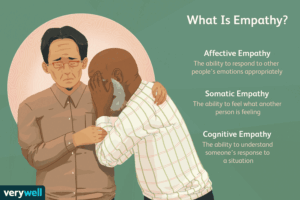





An empath is a person who has a heightened ability to sense, absorb, and understand the emotions and physical sensations of others, often feeling them as if they were their own. Unlike general empathy (understanding another’s feelings), empaths experience a profound emotional and often physical resonance, blurring the line between self and other. While empathy is a universal human capacity, true empaths are considered a rarer subset, estimated at only about 1-2% of the population, and this heightened sensitivity is not classified as a medical disorder.
The science behind this phenomenon may be linked to mirror neurons—brain cells that fire both when performing an action and when observing the same action in others. Researchers believe that empaths may have more active mirror neuron systems, allowing literal mirroring of the emotional and physical states of those around them. This wiring explains why an empath might physically feel a friend’s headache or experience overwhelming anxiety in a crowded room, absorbing the collective emotional energy of the environment.
Common Types of Empaths
- Emotional Empath: Highly sensitive to others’ feelings, experiencing joy when others are joyful and distress when others are distressed.
- Physical Empath: Tuned into others’ physical pain and ailments, sometimes even manifesting the same symptoms in their own body.
- Intuitive Empath: Exceptionally perceptive and intuitive, often described as being able to read minds or sense unspoken truths, with a strong ability to detect dishonesty.
Key Signs of an Empath
- Frequent reports of being a great listener, with people naturally confiding in them.
- Very strong intuition and quick detection of dishonesty or inauthenticity.
- Frequent feelings of overwhelm, anxiety, or exhaustion in crowded places like malls or concerts.
- Struggle to set emotional boundaries, often prioritising others’ needs and feelings over their own.
- Physical reactions to emotionally charged media or events, such as a racing heart during a tense movie scene.
Being an empath carries both significant strengths and potential vulnerabilities. On the positive side, empaths are naturally caring, compassionate, and capable of forming incredibly deep, meaningful connections. They are often drawn to healing professions such as therapy, nursing, or teaching. However, the lack of emotional boundaries can lead to compassion fatigue, burnout, and difficulty distinguishing their own feelings from those absorbed from others. For empaths, rigorous self-care, learning to set firm boundaries, and spending time alone to recharge are not luxuries but necessities for maintaining mental health.