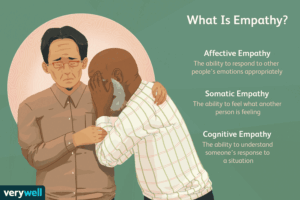






Empathy in human behaviour is a multifaceted capacity that fundamentally shapes how we connect, cooperate, and respond to others. Decades of research conceptualise empathy as involving three distinct components that operate through different neural pathways and lead to divergent behavioural outcomes.
Three Components of Empathy
- Empathic Concern: Warm feelings of compassion for others; motivates helping behaviour
- Perspective Taking: Understanding another’s point of view intellectually
- Personal Distress: Experiencing vicarious anxiety or discomfort; can lead to avoidance rather than help
The behavioural impact of empathy varies significantly by component. Individuals high in Empathic Concern and Perspective Taking tend to feel more positive emotions—such as connection and compassion—when witnessing another’s suffering, which in turn motivates helping behaviour. This prosocial orientation is so fundamental that some evolutionary theorists suggest empathy, along with social motivation, creates a “stake in others” necessary for altruism to evolve. In contrast, those prone to Personal Distress experience negative feelings like nervousness and anxiety, which can lead to avoidance or inaction rather than help.
Research Findings (2025 experience sampling study, over 7,300 surveys)
- Trait empathy predicts real-world empathic experiences but explains limited variance:
- 3% for emotion sharing
- 15% for perceived empathic efficacy
- Emotional valence (positive vs. negative situations) significantly improves prediction
- Empathy is not a fixed trait but fluctuates with social context, relationship closeness, and group membership
Clinical and Evolutionary Implications
- Deficits in affective empathy linked to callous-unemotional traits and aggression, even at subclinical levels
- Empathy can be cultivated through training that enhances empathic concern while reducing personal distress
- As evolutionary psychologist Rick Hanson notes, the complexities of social relationships—not tool use or violence—drove human brain evolution
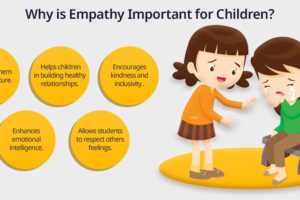
Empathy in human behaviour is both an innate biological capacity and a trainable skill—one that bridges self and other, motivates altruism, and ultimately enables the cooperative societies we inhabit.