






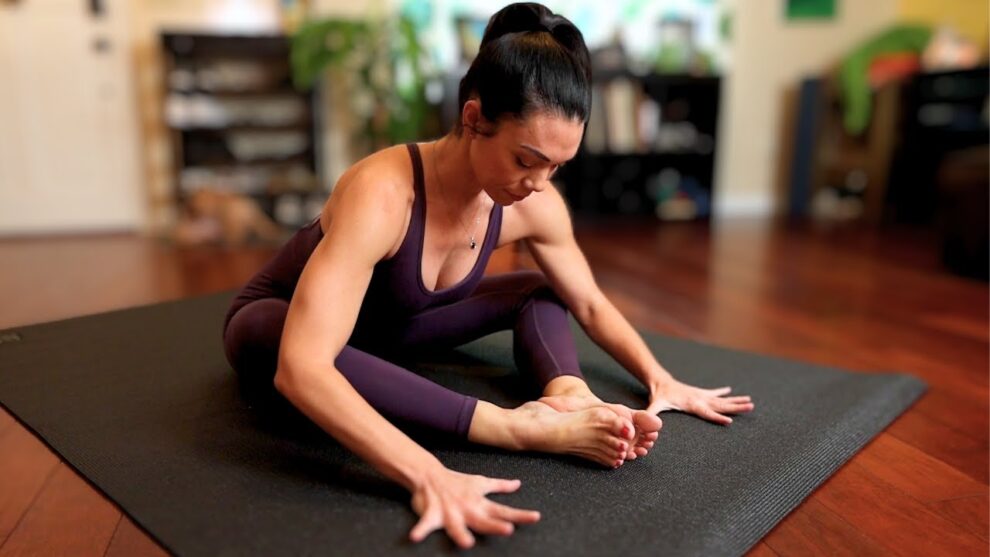


Yoga for stress relief and calm is an evidence-based mind-body practice that reduces cortisol, activates the parasympathetic nervous system, and improves emotional regulation. A 2026 meta-analysis of 30 controlled studies (2,288 participants) found that yoga significantly improved stress (ES = -0.54), anxiety (ES = -0.52), and depression (ES = -0.50), with older adults showing greater stress-reduction benefits. A 2024 meta-analysis of 18 RCTs (1,214 medical/dental students) confirmed that yoga significantly reduced systolic blood pressure (6.82 mmHg), heart rate (2.55 beats/min), and stress (0.77 on standardized assessments).
“Yoga for stress relief teaches us that peace is not found outside, but created within through breath, balance, and mindful movement.”
“Yoga for stress relief is the art of quieting the mind, where each breath becomes a step away from tension and toward inner peace.”
How Yoga Reduces Stress
- Activates the vagus nerve, shifting the nervous system from “fight-or-flight” to “rest-and-digest”
- Lowers cortisol and increases GABA (calming neurotransmitter)
- Improves heart rate variability, indicating better autonomic balance
- Reduces inflammatory gene expression and supports cellular health
Research Findings
- 30-day integrated yoga (60 min daily, 6 days/week, 80 adolescents): Large effect sizes for stress reduction (ES = -0.864), anxiety (ES = -0.827), and depression (ES = -0.748); mental well-being and mindfulness significantly improved
- Asynchronous online yoga (8 weeks, 40 adults): Significant decreases in perceived stress and sleep disturbance; significant increases in mindfulness and mood
- Ashtanga yoga review: Regular practice significantly reduces perceived stress and improves subjective well-being through enhanced mindfulness, relaxation response, and emotional regulation
- Mayo Clinic: Mindful breathing in yoga increases parasympathetic activity, lowering heart rate, improving digestion, sleep quality, and immune function
For optimal stress relief, practice 2-3 sessions per week (45-60 minutes), combining asanas, pranayama (breathing exercises), and meditation. Even brief daily practice (10-20 minutes) yields meaningful improvements. Yoga Nidra (“yogic sleep”) is particularly effective for deep relaxation. As Dr Yufang Lin of the Cleveland Clinic notes, “When you repeat these activities over time, you increase heart rate variability and strengthen your vagus nerve function”. Always consult a healthcare provider before beginning any new exercise regimen.