







Yoga for evening calm is a gentle, restorative practice that shifts the nervous system from daytime “fight or flight” mode to the “rest and digest” state essential for deep relaxation and sleep. Research confirms that even a single evening session helps reduce physical tension, lower heart rate, and decrease stress hormones in the body. A 2025 randomised controlled trial found that regular Yoga Nidra practice significantly reduced perceived stress, anxiety, and depression, with improvements in diurnal cortisol patterns—even with just 11 minutes daily. Participants showed reductions in total cortisol and steeper diurnal slopes, indicating healthier stress regulation.
The physiological benefits of evening yoga operate through multiple pathways. Slow, deep breathing combined with gentle postures activates the parasympathetic nervous system (the “rest and digest” branch), increasing heart rate variability and promoting a state of physiological calm. Controlled trials in insomnia report that regular practice shortens sleep-onset latency and increases total sleep time, while both healthy and clinical populations demonstrate reductions in perceived stress and anxiety. Even a single vinyasa session, when performed in the early evening, does not impair sleep, confirming evening yoga as a safe practice.
Key poses for evening calm include
- Legs-Up-the-Wall (Viparita Karani) to promote circulation and calm the mind;
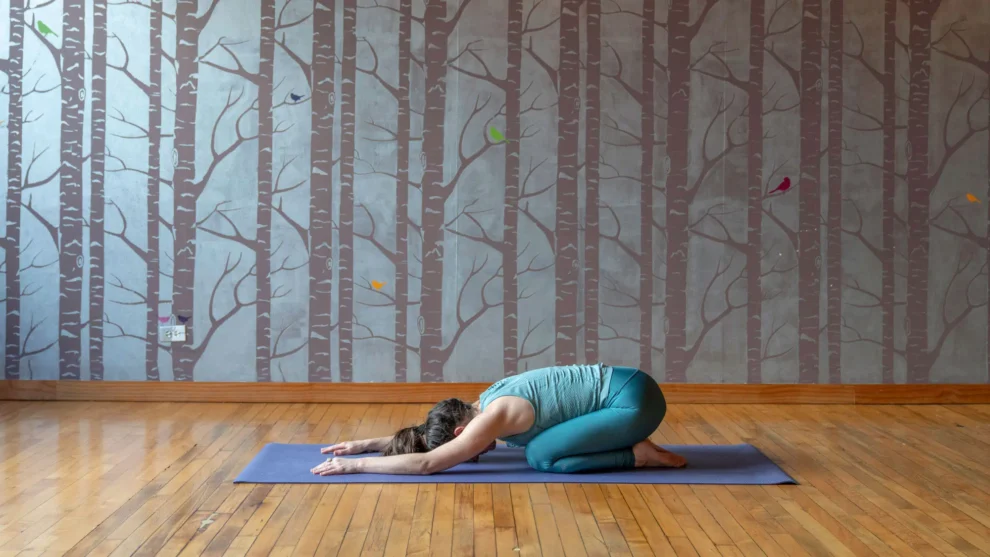
- Child’s Pose (Balasana) for releasing back and shoulder tension;
- Cat-Cow (Marjaryasana-Bitilasana) for gentle spinal mobility and breath synchronisation;
- Supine Twist for releasing spinal tension;
- Corpse Pose (Savasana) with extended exhale—start with 4-second inhales and 4-second exhales, then add one second to the exhale until reaching 8 seconds to emphasise the relaxing component of breath.
A 10- to 15-minute sequence can be done on a mat or even in bed, making it accessible for any evening routine.
Evening yoga offers an accessible, sustainable path to calm—requiring no special equipment, only a few minutes of intentional movement and breath before sleep. Yoga Nidra, a guided meditation practised lying down, provides deep rest with one hour offering relaxation comparable to four hours of sleep . As one yoga instructor notes, “positioning the body in a physical pose alone, without the breath, doesn’t have near the effect on the nervous system that combining it with the breath does” . Consistency matters more than duration: even 5-10 minutes nightly can have profound cumulative effects on stress and sleep quality .