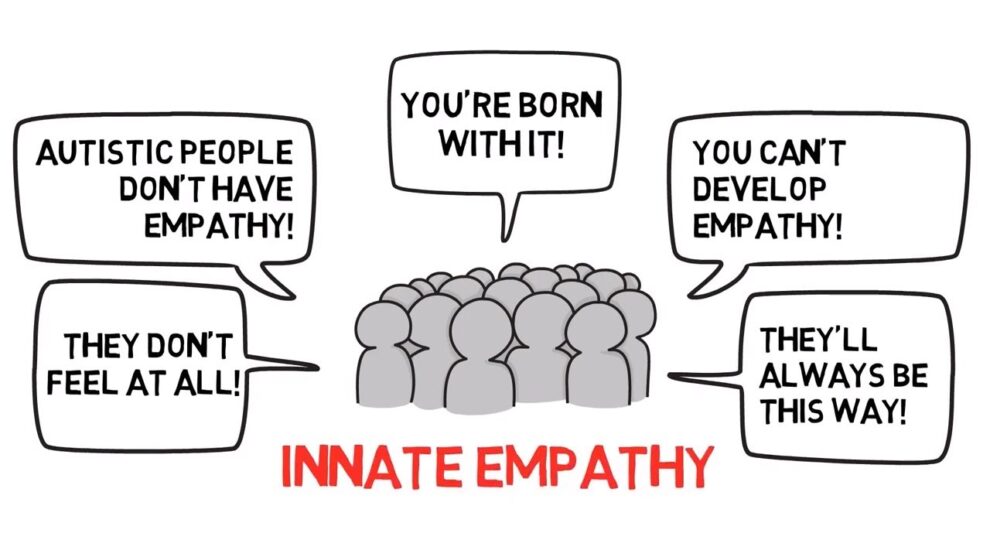


The relationship between empaths and autism challenges long-held assumptions about empathy deficits. While traditional models suggested autistic people lack empathy, contemporary research reveals a far more complex picture. Autistic individuals often experience empathy differently—not as an absence, but as a distinct pattern of emotional and cognitive processing. This reframing has significant implications for understanding both autism and the nature of empathy itself.
Research distinguishes between two forms of empathy in autism.
- Cognitive empathy—understanding another’s perspective—may present differently in autistic individuals compared to non-autistic peers.
- Affective empathy—sharing another’s emotional experience—often remains intact or even heightened.
Some autistic individuals experience hyper-empathy, feeling emotions so intensely that it becomes overwhelming and debilitating. The concept of alexithymia—difficulty identifying and recognising emotions—helps explain why some autistic people struggle with emotional understanding while others do not.
What makes this relationship compelling is the double empathy problem, introduced by Dr. Damian Milton. This theory proposes that empathy difficulties are bidirectional: non-autistic people find it equally difficult to understand autistic perspectives as autistic people find understanding non-autistic perspectives. Research demonstrates that autistic individuals communicate more effectively and experience greater rapport when interacting with other autistic people. This challenges the deficit model and reframes empathy differences as mutual misunderstandings rather than one-sided impairments.
Empaths and autism represent not a simple story of deficit but one of difference—autistic individuals may experience empathy deeply, express care through alternative channels, and connect most authentically with those who share similar perceptual frameworks, inviting a broader understanding of empathy’s diverse manifestations across all human minds.