





Empathic feelings are the emotional experiences that arise in an individual when they connect with and respond to another person’s emotional state. At its core, this involves a vicarious affective response—feeling what another person feels as if their experience were one’s own. This phenomenon is distinct from merely understanding another’s perspective; it is a deeply felt resonance that can manifest as shared joy, vicarious pain, or echoing sorrow.
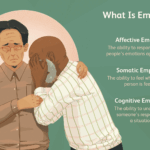
Empathic feelings are rooted in automatic neural processes, particularly the firing of mirror neurons, which fire both when we experience an emotion and when we observe it in someone else. The intensity of these feelings can vary. For an “empath,” this emotional sharing is exceptionally heightened, such that they may not only understand but also literally absorb the emotions and even physical sensations of those around them. Research distinguishes between different forms of this resonance, such as affective empathy, which is the direct sharing of another’s emotional state, and somatic empathy, in which one physically experiences sensations, such as pain, in response to another’s plight.
What makes empathic feelings both powerful and complex is their dual nature. They are essential for forming deep social bonds, fostering compassion, and motivating prosocial behaviour aimed at alleviating others’ suffering. However, unregulated empathic feelings can lead to significant personal distress. Absorbing others’ negative emotions can result in emotional overload, compassion fatigue, and burnout, particularly for those in caregiving roles. The key to healthy empathy lies in maintaining a distinction between self and other, feeling with someone without losing awareness that the feeling is not one’s own.
Empathic feelings are the emotional bridge that connects human beings, allowing us to genuinely share in the inner lives of others. Yet, they require balance and self-awareness to transform this profound vulnerability into a sustainable source of connection rather than a pathway to exhaustion.