





Someone with no empathy is an individual who lacks the fundamental capacity to recognise, understand, or share the feelings and perspectives of others. This absence is not merely occasional insensitivity but a persistent inability to connect with others’ emotional experiences. As one psychological description explains, such a person has “difficulty imagining another person’s perspective and responding with care” across most situations and relationships.
Individuals with no empathy display consistent patterns. They fail to recognise emotional cues in faces, tone, or body language. They respond to others’ distress with indifference, confusion, or completely inappropriate reactions. Conversations revolve entirely around their own experiences, with no curiosity about how others feel. They appear genuinely unaware of how their words or actions impact those around them. This creates relationships where others consistently feel unheard, invalidated, and emotionally abandoned.
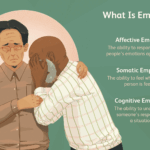
What makes this condition complex is its varied origins. Some have neurological conditions like alexithymia that prevent emotion identification. Others grew up in environments where emotional expression was punished, stunting empathic development. In some cases, no empathy reflects broader patterns associated with personality traits like narcissism or antisocial tendencies. Crucially, the distinction between cognitive empathy deficits (understanding others) and affective empathy deficits (sharing feelings) helps explain different presentations—some understand intellectually but don’t care; others would care but cannot perceive.
Someone with no empathy navigates life with a fundamental blindness to the emotional worlds around them, leaving others feeling unseen and alone. Yet even this absence exists on a spectrum, and with awareness and practice, some capacity for connection can still be cultivated.