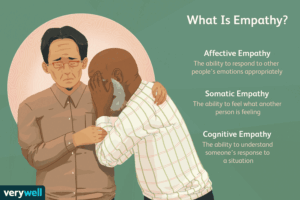






Empathy examples are practical illustrations of how the capacity to understand, share, and respond to others’ feelings manifests in everyday situations and professional contexts. These examples transform the abstract concept of empathy into tangible, observable behaviours that demonstrate genuine connection. Whether in personal relationships, healthcare settings, or customer service interactions, empathy examples reveal the specific words and actions that make others feel truly seen and understood.
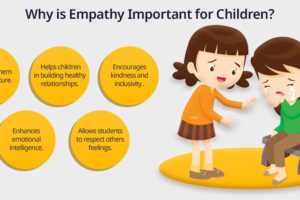
In personal relationships, empathy appears through active presence and validation. A friend listening without interrupting as another processes grief, then simply saying “That sounds incredibly hard—I’m here with you” demonstrates emotional empathy. A partner noticing subtle signs of stress—shorter responses, tired eyes—and asking “You seem drained today. Want to talk about it?” shows cognitive empathy in action. When a child is upset over a lost toy, an empathetic parent kneels to their level and says, “I see how sad you are. It’s okay to feel this way,” validating emotions rather than dismissing them.
In professional contexts, empathy takes different forms. A manager who notices an employee’s performance decline and asks, “I’ve noticed you seem distracted—is everything okay?” rather than immediately criticising demonstrates empathetic leadership. A customer service representative who responds to a complaint with “I completely understand your frustration—let me make this right” rather than defensive script-reading practices provides empathetic service. Healthcare providers show empathy through presence: a nurse sitting at eye level with an anxious patient, speaking calmly and acknowledging their fear before explaining procedures.
What makes these examples particularly compelling is the contrast between empathic and non-empathic responses. When a colleague shares bad news, an empathic response might be “I’m so sorry you’re going through this. I’m here if you need anything.” A non-empathic response dismisses: “At least it’s not worse” or “Here’s what you should do.” The OXO Good Grips peeler exemplifies empathy in product design: observing someone with arthritis struggling with standard kitchen tools led to ergonomic products now used by millions. In healthcare, the Philips Azurion platform demonstrates empathy through design: noticing that mechanical sounds heightened patient anxiety, engineers redesigned motion and sound to create calm.
Empathy examples reveal that genuine connection lives not in grand gestures but in small, consistent moments of presence—the friend who listens without fixing, the leader who notices without judging, the designer who observes without assuming—each demonstrating that being truly seen by another is one of life’s deepest gifts .