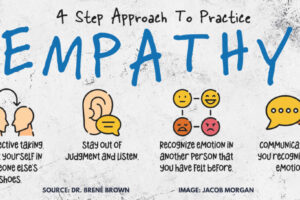





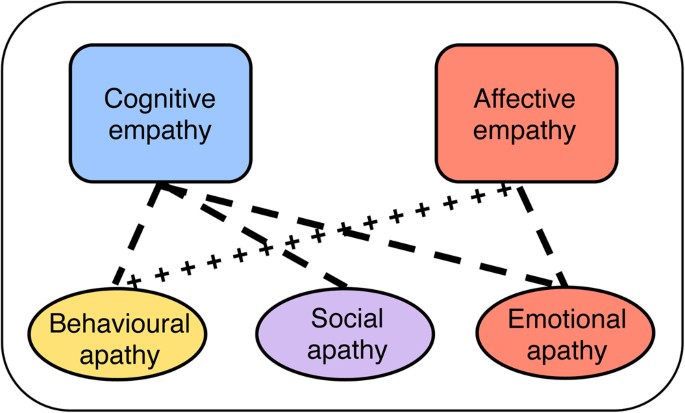


Cognitive empathy refers to the ability to comprehend another person’s thoughts, viewpoint, and mental framework without necessarily experiencing their emotions. It is commonly known as perspective-taking—the skill of setting aside one’s own vantage point to envision how a circumstance appears from someone else’s position. As one psychologist describes it, this form of empathy involves intellectually grasping another’s inner state while preserving emotional detachment.
Cognitive empathy engages distinct neural circuitry from its emotional counterpart. It activates the medial prefrontal cortex and temporoparietal junction, regions associated with theory of mind and mentalizing. This capacity enables individuals to interpret social signals, foresee responses, and maneuver through complex interpersonal dynamics. It proves indispensable in contexts like negotiation, leadership, and dispute resolution, where comprehending another’s stance holds greater weight than sharing their emotional state.
What renders cognitive empathy particularly intriguing is its dual-edged nature. It can serve benevolent purposes—appreciating a friend’s hardship—or enable manipulation, as demonstrated by adept deceivers who effortlessly read their targets. Another compelling dimension involves its integration into artificial intelligence. Engineers now embed cognitive empathy into machines, programming them to recognise human emotions without experiencing them. Whether human or artificial, cognitive empathy demands ethical guidance. Without the tempering influence of emotional empathy, such understanding remains clinically detached and potentially destructive.
Cognitive empathy represents the intellectual bridge spanning the distance between separate minds. It delivers comprehension without emotional immersion, clarity without inevitable connection. When paired with emotional empathy, however, it completes the human capacity to both grasp another’s experience and resonate with its felt weight.