





Empathy development exercises are structured practices designed to strengthen the capacity to understand and share others’ feelings. Like any skill, empathy grows stronger with intentional exercise. These exercises range from simple daily practices to more structured activities. As psychologist Dr. Jamil Zaki explains, “Empathy is not a fixed trait but a flexible skill. With the right exercises, anyone can become more empathic.”
Effective empathy exercises target different dimensions of empathic capacity.
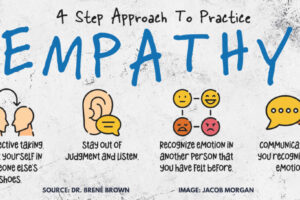
- Active listening practice involves giving full attention without interrupting or planning responses.
- Perspective-taking exercises ask participants to imagine themselves in another’s situation.
- Emotion recognition activities use facial expressions, tone, and body language to identify feelings.
- Self-compassion exercises—like considering how you would advise a struggling friend—build the inner resources needed to extend empathy outward.
- Microconnections—small acts of acknowledgement and kindness—create daily habits of noticing others.
What makes these exercises powerful is their accessibility. Anyone can practice them without special training. Another compelling aspect is the neuroscience behind them—each exercise strengthens neural pathways supporting empathy.
- Diverse media consumption reading fiction, and watching films about different cultures—activates brain regions involved in perspective-taking.
- Role-playing scenarios provide safe spaces to practice empathic responses.
- Listening to opposing views, without debating, builds understanding across differences. Research shows that consistent practice produces measurable increases in empathic capacity.
Empathy developing exercises transform intention into neural change. They offer a path from wanting to be more empathic to actually becoming so. As Zaki concludes, “By building self-compassion, we are increasing our capacity for empathy. Small exercises, practised regularly, create lasting change.”
Here is a 12-week (3 months) table for Empathy Development Exercises with topics and remarks.
| Week | Empathy Development Exercises (Topic) | Remarks |
|---|---|---|
| Week 1 | Understanding the basics of empathy and emotional awareness | Introduction to empathy and why it matters |
| Week 2 | Active listening practice with friends or colleagues | Focus on listening without interrupting |
| Week 3 | Perspective-taking exercises | Try to see situations from another person’s viewpoint |
| Week 4 | Emotion recognition practice | Identify emotions from facial expressions and tone |
| Week 5 | Mindfulness and emotional reflection | Daily short meditation to understand feelings |
| Week 6 | Compassion and kindness activities | Perform small acts of kindness intentionally |
| Week 7 | Empathy journaling exercises | Write daily about others’ feelings and experiences |
| Week 8 | Role-playing empathy scenarios | Practice responding empathetically in conversations |
| Week 9 | Cultural empathy and diversity awareness | Learn about different cultural perspectives |
| Week 10 | Conflict resolution with empathy | Apply empathy to solve misunderstandings |
| Week 11 | Workplace empathy exercises | Support colleagues and practice understanding work stress |
| Week 12 | Reflection and empathy habit building | Review progress and create long-term empathy practices |