


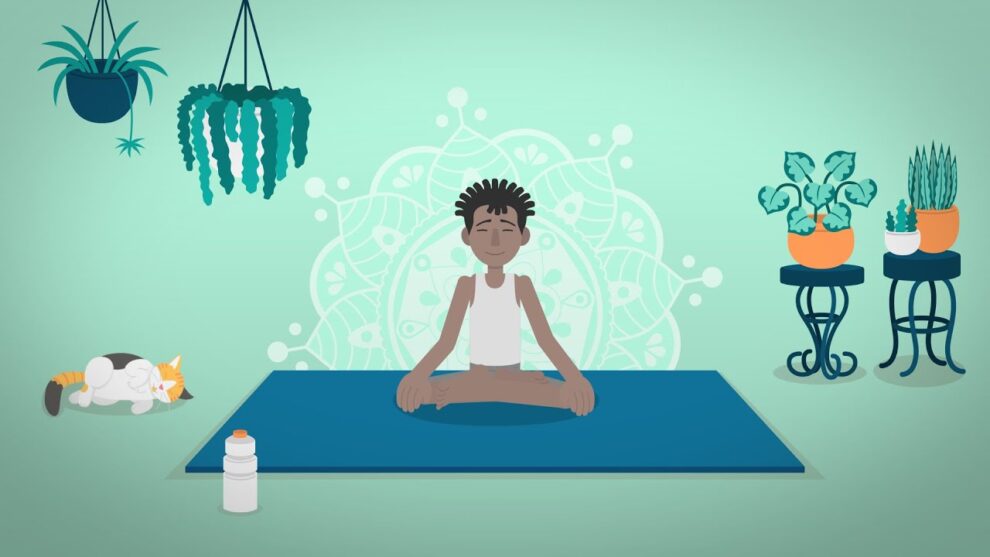


Yoga for calming anxiety is an evidence-based mind-body practice that combines gentle postures, breathwork, and meditation to reduce stress and promote relaxation. Research confirms that consistent yoga practice significantly lowers anxiety symptoms and improves overall mental well-being. A 2025 scoping review of 30 studies (1,548 participants) found that single yoga sessions lasting over 30 minutes effectively reduce anxiety in both healthy adults and those with mental illnesses, with 75% of clinical studies reporting significant anxiety reduction post-session.
The physiological mechanisms behind yoga’s calming effects operate through multiple pathways. Yoga increases gamma-aminobutyric acid (GABA)—a neurotransmitter that calms neural activity—with studies showing yoga boosts GABA more than walking, resulting in improved mood and reduced anxiety. It also lowers cortisol (the primary stress hormone), activates the parasympathetic nervous system, and reduces activity in the amygdala—the brain’s fear centre. A JAMA Psychiatry study found that yoga worked as effectively as cognitive behavioural therapy (the gold standard for anxiety treatment) for reducing anxiety in people with generalised anxiety disorder.
Key calming poses include
- Child’s Pose (Balasana) for turning attention inward and releasing tension ;
- Legs-Up-the-Wall (Viparita Karani) for allowing the body to linger in therapeutic stillness ;
- Cat-Cow (Marjaryasana-Bitilasana) for slow, rhythmic movement coordinated with steady breathing;
- Seated Forward Bend (Paschimottanasana) for signalling the body to relax ;
- Bound Angle Forward Bend (Baddha Konasana Uttanasana) for combining gentle hip opening with slowed breathing.
- For breathwork, extended exhale breathing (4-second inhale, 8-second exhale) activates the parasympathetic response, while Ujjayi breath promotes steadier breathing patterns suitable for anxiety.
Yoga offers an accessible, non-pharmacological approach to calming anxiety—working through nervous system regulation, neurotransmitter balance, and mindful presence. For those who cannot access traditional therapy, yoga provides a valuable alternative for self-managing anxiety symptoms. Even a single session lasting 30-45 minutes can produce immediate anxiety-reducing effects, while consistent practice builds lasting resilience. As one expert notes, yoga “carries little risk; it’s accessible; and it has at least a short-term effect on anxiety”.