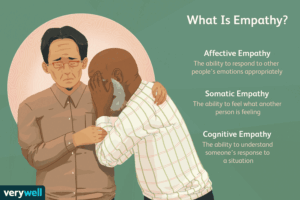






Understanding empathy requires recognising it as a multidimensional capacity that enables humans to connect with one another’s inner worlds. Empathy is the ability to perceive, understand, and share another person’s feelings and perspectives. The term originated from the German word Einfühlung (“feeling into”), which was translated into English by psychologist Edward Titchener in 1909. Unlike sympathy (feeling for someone), empathy involves feeling with someone—entering their emotional experience while maintaining awareness that the feeling is theirs.
The Two Core Components
- Cognitive empathy (perspective-taking): The intellectual ability to understand another’s mental state, thoughts, and viewpoint. This allows you to grasp why someone feels a certain way without necessarily sharing that feeling.
- Affective empathy (emotional resonance): The capacity to physically and emotionally share another’s feelings. This is what makes you wince when someone stubs their toe or tear up at a friend’s grief.
- Compassionate empathy (empathic concern): A third dimension that motivates helping. It asks not just “I understand” or “I feel you,” but “How can I help?”
Why Empathy Matters
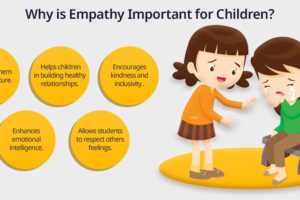
Empathy is essential for social functioning, moral development, and relationship quality. It allows us to cooperate, resolve conflicts, and provide meaningful support. Research shows empathy is associated with better relationship satisfaction, effective leadership, and prosocial behaviour. However, unregulated empathy can lead to compassion fatigue—highlighting the importance of balancing emotional resonance with healthy boundaries.
The Empathy Spectrum
Empathy exists on a continuum. Some individuals have unusually high empathy (hyper-empaths, approximately 1-3% of the population), while others have low or absent empathy due to neurological conditions or personality disorders. Most people fall somewhere in the middle, and crucially, empathy can be cultivated through intentional practice—active listening, perspective-taking exercises, and mindfulness meditation have all been shown to strengthen empathic capacity.
Understanding empathy is the first step toward developing it. By recognising its components—cognitive, affective, and compassionate—we can intentionally practice each dimension, building the emotional intelligence that underpins meaningful human connection. As one researcher noted, “Empathy is not a fixed trait but a flexible skill that can be strengthened with practice”. Whether in personal relationships, professional caregiving, or everyday interactions, empathy transforms how we see and respond to the people around us.