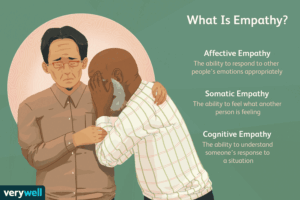







The definition of empathy and sympathy distinguishes two related but fundamentally different human responses. Empathy is the ability to understand and share another person’s feelings—to feel with them, stepping into their emotional experience. Sympathy is the feeling of pity or concern for someone else’s misfortune—to feel for them from a caring but emotional distance. As Brené Brown summarised, “Empathy fuels connection; sympathy drives disconnection.”
Key Differences
- Empathy: Feeling with someone; requires vulnerability; involves perspective-taking and emotional resonance
- Sympathy: Feeling for someone; maintains emotional distance; often expressed as “I’m sorry you’re going through this”
Clinical Definitions
- Cognitive empathy: Understanding another’s mental state intellectually
- Affective empathy: Sharing another’s emotional state
- Sympathy: Acknowledgement and concern without shared emotional experience
Why It Matters
Empathy enables deep emotional attunement but risks compassion fatigue. Sympathy provides sustainable care by maintaining professional boundaries while expressing genuine concern. Empathy for intimate relationships, sympathy for professional caregiving contexts.
Both are valuable capacities. Empathy builds connection through shared experience; sympathy offers comfort while maintaining healthy boundaries. As one ethicist noted, “Sympathy is care and concern wishing someone well, while empathy involves sharing their actual emotional state.” Both are essential for a fully humane response to suffering.