







Meditation is a practice in which a person trains the mind to become calm, focused, and aware. It often involves paying attention to breathing, thoughts, sounds, or body sensations in a peaceful way. People from many cultures have used meditation for thousands of years to improve mental clarity and inner balance. Today, meditation is commonly practiced for relaxation, concentration, emotional control, and overall well-being. Simple forms of meditation can be done by anyone, even beginners, by sitting quietly and focusing on slow breathing for a few minutes each day.
“Meditation is the journey from sound to silence, from movement to stillness, from a limited identity to unlimited space.” — Sri Sri Ravi Shankar
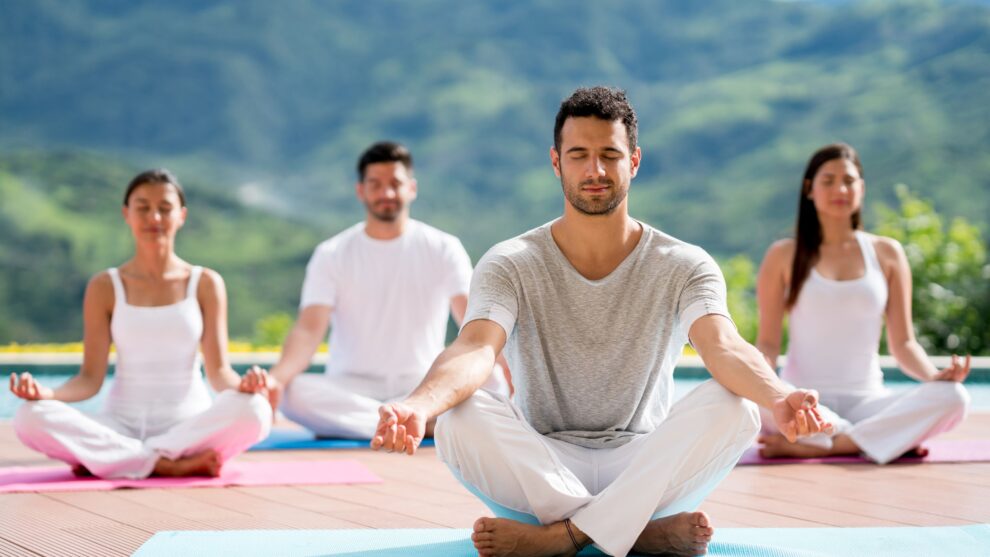
Meditation is closely connected with yoga because many yoga postures help prepare the body and mind for meditation. In traditional yoga, physical poses such as the lotus pose, child’s pose, or easy seated pose help the body stay comfortable and steady during meditation. Stretching and breathing exercises in yoga reduce physical tension, making it easier to concentrate without discomfort. Yoga also teaches controlled breathing and mindfulness, which naturally support meditation practices and improve mental focus.
Meditation provides many benefits for both the mind and body. Regular practice may reduce stress, anxiety, and mental fatigue while improving concentration and emotional balance. Many people feel more peaceful, patient, and positive after practicing meditation regularly. It can also support better sleep, healthier breathing patterns, and relaxation of muscles. When meditation is combined with yoga postures, it creates a balanced routine that strengthens the body while calming the mind, helping people feel healthier and more energetic in daily life.Yoga for meditation is an evidence-based mind-body practice that integrates postures, breathing exercises, and focused awareness to enhance cognitive function, reduce stress, and improve emotional well-being. Research confirms that yoga prepares both the body and mind for deep meditative states by regulating the nervous system and increasing interoceptive awareness.
- Brain wave changes: A 15-minute yoga sequence (e.g., Sun Salutations) reduces β and γ brainwave activity and alters activity in the visual network, insular cortex, and frontal gyrus – changes associated with improved attention and adaptive decision-making.
- Stress & anxiety reduction: A meta-analysis of 18 RCTs (1,214 medical/dental students) found that yoga significantly reduced stress (0.77 on standardized assessments, p < 0.0001) and lowered anxiety (1.2 points, p = 0.01), along with reductions in systolic blood pressure (6.82 mmHg), diastolic blood pressure (2.92 mmHg), and heart rate (2.55 beats/min).
- Long-term benefits: A study of 335 long-term practitioners (mean 10.2 years) found that all four yoga components (postures, breathing, relaxation, meditation) improved spiritual well-being (p < 0.001; η² = 0.06–0.09) and subjective well-being (p = 0.003–0.05; η² = 0.03–0.04).
- Yoga Nidra effects: Increases dopamine release in the ventral striatum, reduces default mode network connectivity, and produces a unique neural state distinct from normal rest or sleep.
- Breath awareness: Increases oxygenated haemoglobin in the dorsolateral prefrontal cortex (DLPFC) – a region critical for attention regulation – with long-term practitioners showing significantly greater activation.
- Open-monitoring meditation: Activates the orbitofrontal cortex and the ventrolateral prefrontal cortex, regions involved in emotional regulation and nonjudgmental awareness.
Practice 2-3 sessions per week (45-60 minutes), combining asanas, pranayama, and meditation. Even a single 15-minute Sun Salutation sequence measurably alters brain activity. For deep meditative relaxation, Yoga Nidra is particularly effective, reducing sleep-onset latency, increasing total sleep time, and lowering perceived stress, anxiety, and depression. A healthcare provider should be consulted before beginning any new exercise regimen.