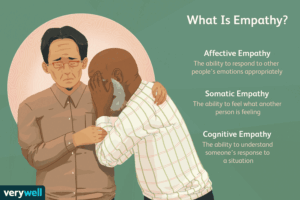






An empathetic person possesses a heightened ability to perceive, understand, and share the emotional experiences of others. Unlike sympathy (feeling for someone from a distance), an empathetic person actively feels with another—stepping into their inner world while maintaining awareness that the feeling is theirs. As Carl Rogers described, empathy involves “sensing the client’s private world as if it were your own, but without ever losing the ‘as if’ quality.”
Core Characteristics
- Active listening: Gives full attention without interrupting or rushing to offer solutions
- Emotional attunement: Accurately reads nonverbal cues—tone, facial expressions, body language
- Validation without judgment: Communicates that another’s feelings make sense, avoiding dismissive phrases like “Don’t worry”
- Perspective-taking: Consciously imagines situations through others’ eyes
- Emotional regulation: Maintains healthy boundaries, absorbing others’ pain without being consumed
How They Differ
Unlike sympathetic individuals who offer comfort from a safe distance, empathetic people climb into the “hole” with the suffering person. Unlike codependent individuals who lose themselves in others’ problems, they maintain a clear self-other distinction. Unlike narcissists who use cognitive empathy to manipulate, they pair understanding with genuine concern.
An empathetic person is not simply someone who “feels bad” for others but someone who consistently shows up—attentive, present, and willing to witness both joy and suffering without turning away. As Brené Brown notes, “Empathy is not connecting to an experience; it’s connecting to the emotions that underpin an experience.” Through consistent practice of active listening, validation, and perspective-taking, anyone can strengthen their capacity to be more empathetic.