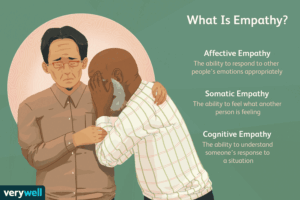
Empathy is the profound ability to recognise, understand, and share others’ feelings. This is not occasional insensitivity but a fundamental disconnect that shapes how an individual relates to the world, with significant consequences for both the individual and those around them.
Individuals with no empathy fail to recognise emotional cues and respond to distress with indifference or inappropriate reactions. Research distinguishes between a lack of cognitive empathy (understanding others’ perspectives) and a lack of affective empathy (sharing emotions). Some may understand feelings intellectually but remain emotionally untouched; others cannot perceive feelings at all.
The absence of empathy has varied origins: neurological conditions affecting empathy-related brain structures, environments where emotional expression was punished, or personality disorders like narcissism and psychopathy. In the latter, individuals often maintain cognitive empathy while lacking affective empathy—understanding others well enough to manipulate them without concern.
A lack of empathy creates isolation on both sides—others feel unseen, while the individual navigates the world blind to emotional realities. Yet understanding the roots of this absence opens pathways for growth, as empathy can sometimes be cultivated with awareness and practice.