






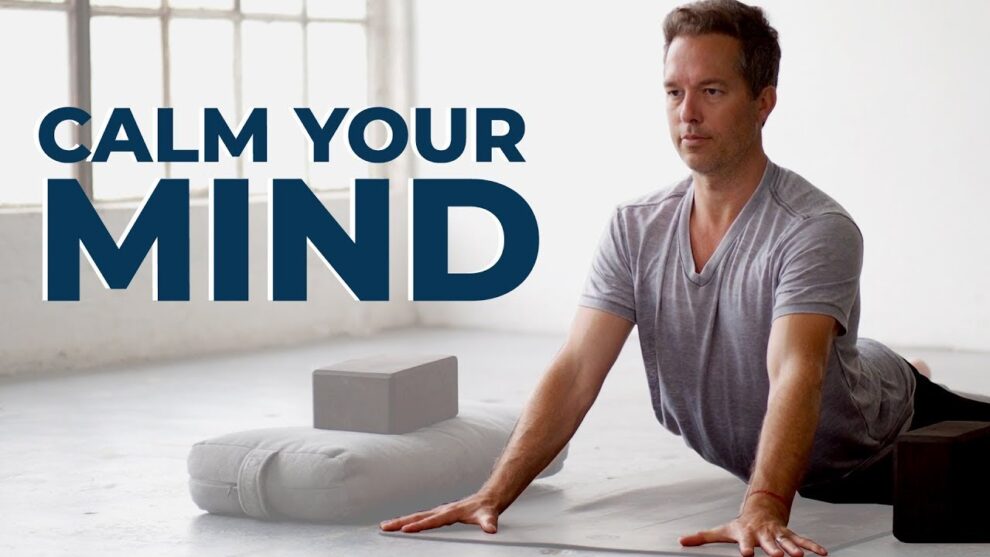


Yoga is a sacred and deeply quietening practice that has been revered across cultures for over 5,000 years as one of humanity’s most trusted and effective pathways to achieving genuine mind relaxation — not the passive numbness of distraction or exhaustion, but the luminous, conscious, and deeply nourishing stillness that arises when the restless mind is gently, skillfully, and compassionately guided back to its own natural state of peace. In a world of perpetual mental noise, digital overstimulation, and the relentless inner monologue of worry, planning, and self-criticism, true mind relaxation has become a radical and essential act of self-preservation — and yoga remains its most ancient, reliable, and beautifully accessible guardian.
A yoga routine designed for mind relaxation typically features deeply calming poses such as
- Child’s Pose (Balasana),
- Legs-Up-The-Wall (Viparita Karani),
- Supported Fish Pose,
- Reclining Butterfly,
- Melting Heart Pose,
- The profoundly releases Corpse Pose (Savasana), each specifically chosen to
- downregulate the nervous system,
- slow the brainwave frequency,
- create the ideal physiological conditions for deep mental unwinding.
Sessions ideally range between 20 to 35 minutes,
- Opening with 4-7-8 breathing or alternate nostril breathing to immediately quiet mental chatter,
- Flowing through passive long-hold sequences of 60 to 90 seconds,
- Closing with yoga nidra — the most powerful mind relaxation tool in the entire yogic tradition.
What makes yoga for mind relaxation truly compelling is its scientifically validated ability to shift the brain from high-frequency beta waves — associated with stress, anxiety, and overthinking — into deeply restorative alpha and theta wave states that characterize genuine mental relaxation and creative renewal. Research confirms that 20 to 30 minutes of calming yoga measurably reduces cortisol, improves sleep onset, enhances memory consolidation, and activates the default mode network in ways that promote psychological restoration — affirming the timeless yogic wisdom that “the mind that is still is the mind that is free — and in that freedom, the deepest healing begins.”
Choosing yoga for mind relaxation is the most gentle, intelligent, and profoundly restorative decision you can make for your mental health — for with every slow conscious breath, every softening pose, and every precious moment of mental stillness you cultivate, you are not escaping your thoughts but transcending them — returning, breath by breath, to the calm, clear, and endlessly peaceful mind that has always been your truest and most beautiful home.