





The relationship between empathy and well-being is complex and paradoxical. Empathy enables stronger relationships and life satisfaction, yet research reveals it as a “double-edged sword”—fostering growth while heightening vulnerability to distress. Understanding this duality is essential for harnessing empathy’s benefits while protecting against its costs.
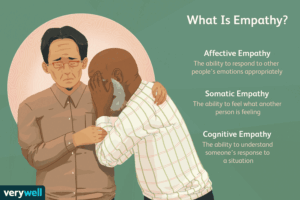
Different empathy dimensions affect mental health oppositely. Affective empathy for negative emotions—sharing others’ distress—contributes to anxiety and depression. Affective empathy for positive emotions—sharing joy—promotes well-being. Cognitive empathy shows no predictive relationship with mental health outcomes. The emotional valence of what we absorb matters profoundly.
A U-shaped relationship exists between empathy and mental health: depression decreases as empathy increases up to a point, but at extremely high levels, cases rise significantly. Extreme sensitivity becomes a risk factor. Positive empathy fosters growth while also heightening distress. Compassion for others—empathy translated into action—consistently links to greater life satisfaction across cultures.
Empathy and well-being intertwine in complex ways—empathy can be both a source of connection and a pathway to vulnerability. The key lies in balanced empathy: feeling with others while maintaining boundaries, sharing joy as readily as sorrow, transforming sensitivity from burden into sustainable gift.