






The most common phobias are intense, irrational fears of specific objects or situations that affect a significant portion of the population. Specific phobia is actually the most prevalent anxiety disorder, with a lifetime prevalence of approximately 12.5%. In the United States alone, about 19.3 million adults (or 9.1% of the population) are affected by specific phobias. These fears typically begin in childhood, with an average onset age of 7 years, and are twice as common in females as in males.
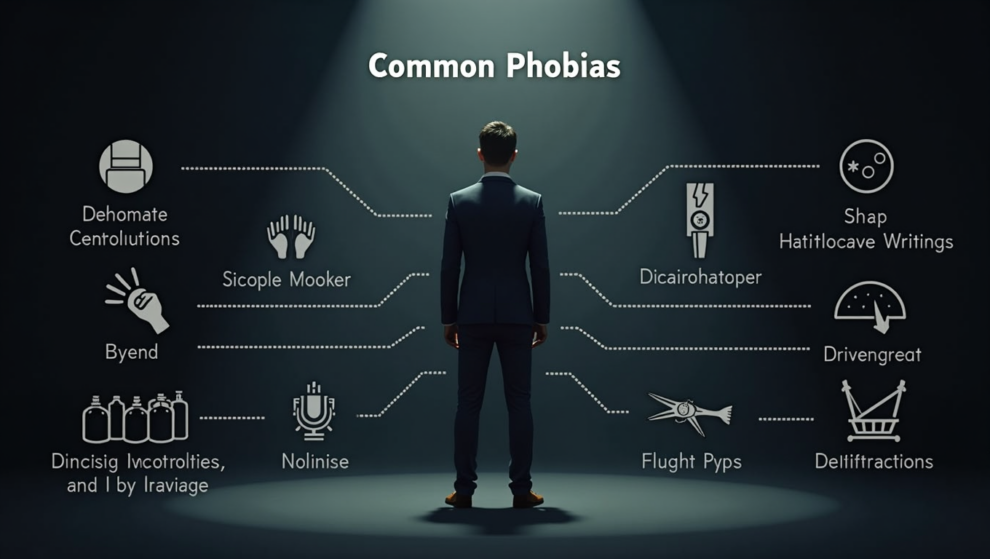
The DSM-5 categorises specific phobias into five distinct types. Animal Type includes fears of spiders (arachnophobia), dogs (cynophobia), snakes, and insects. Natural Environment Type encompasses fears of heights (acrophobia), storms (astraphobia), and water (aquaphobia). Blood-Injection-Injury Type involves fears of seeing blood, receiving injections, or witnessing medical procedures. Situational Type includes fears of flying (aviophobia), enclosed spaces (claustrophobia), elevators, and driving. A fifth Other Type covers fears that don’t fit elsewhere, such as fear of choking, vomiting, loud sounds, or clowns. Studies suggest that approximately 10% of the UK population experience claustrophobia at some point, and an estimated 6% suffer from full-blown arachnophobia.
What makes these phobias particularly compelling is their physiological distinctiveness. The Blood-Injection-Injury subtype is unique because exposure produces an initial sympathetic surge followed by a potentially dangerous drop in heart rate and blood pressure, leading to a vasovagal response and fainting in over two-thirds of affected individuals. This specialised response requires a modified treatment called Applied Tension (AT), where patients tense muscles for 10-15 seconds to temporarily raise blood pressure and prevent syncope. Research demonstrates that exposure therapy has a success rate between 66% and 90% for phobia treatment, with low clinical relapse rates (often 0–14%) after successful completion. Interestingly, emerging research on unconscious exposure therapy—where patients are exposed to feared stimuli without conscious awareness—shows promise, with 38 of 39 studies finding significant fear reduction.
The most common phobias affect millions worldwide, yet they are highly treatable conditions—exposure-based interventions remain the gold standard, with brief, well-structured therapy often producing dramatic improvement, proving that even the most paralysing fears can be overcome with the right therapeutic approach.