




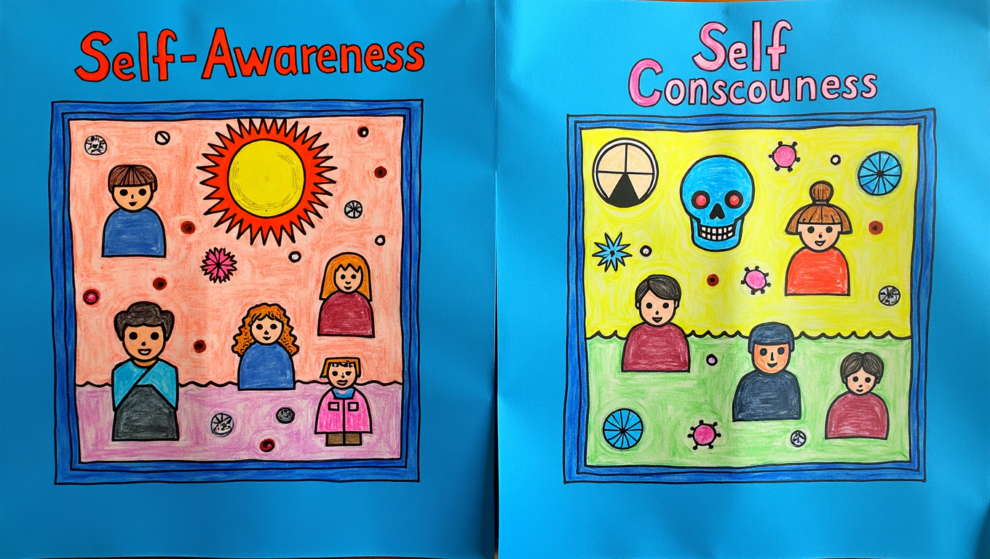


Self-awareness and self-consciousness are related but distinct psychological concepts that influence how individuals perceive themselves. Self-awareness is the conscious knowledge of one’s thoughts, feelings, and behaviors, fostering reflection and growth. Self-consciousness, on the other hand, involves heightened concern about oneself in relation to others, often accompanied by worry or sensitivity to judgment.
“Happiness and success grow when we learn the art of paying full attention to each moment.”
Self-awareness is generally constructive, helping individuals understand their strengths, weaknesses, and emotions. It allows for intentional behaviour, effective decision-making, and personal development. In contrast, self-consciousness can be both positive and negative. As noted by Arnold H. Buss, public self-consciousness—the concern with how one is perceived by others—can lead to social anxiety, overthinking, and self-doubt. Private self-consciousness, focused on internal reflection, can overlap with self-awareness and promote self-improvement.
The key difference lies in the focus and emotional impact: self-awareness is neutral or positive, oriented toward understanding oneself, while self-consciousness often involves fear of evaluation, comparison, or embarrassment. Excessive self-consciousness can hinder confidence and social engagement, whereas healthy self-awareness enhances resilience and personal growth.
“Life becomes richer and more meaningful when we focus fully, rather than letting it pass in distraction.”
In modern contexts, digital and social media platforms can blur the line between self-awareness and self-consciousness. While self-awareness can guide thoughtful self-presentation and personal branding, excessive concern about likes, comments, and public perception may escalate self-consciousness, potentially leading to stress or social anxiety.
In conclusion, self-awareness and self-consciousness are interconnected but distinct. Self-awareness encourages understanding and growth, while self-consciousness, particularly in its excessive form, may trigger anxiety and self-doubt. Cultivating self-awareness while managing self-conscious tendencies is essential for balanced emotional and social well-being.