





Self-understanding is the deep, introspective knowledge of one’s own character, feelings, motives, beliefs, and desires. It involves the ability to reflect on oneself, recognise patterns in behaviour and emotional responses, and comprehend how one’s history and identity shape present experiences. As the philosopher Martin Heidegger noted, self-understanding is not merely cognitive awareness but a fundamental mode of “being-in-the-world” that shapes how we interpret everything we encounter. This capacity distinguishes humans and enables authentic living aligned with true values rather than conditioned patterns.
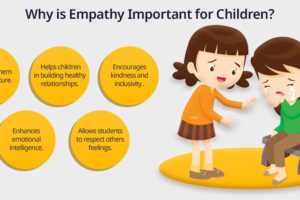
Self-understanding develops progressively throughout life, moving from concrete self-descriptions in childhood to abstract, multidimensional self-awareness in adulthood. In early childhood, children describe themselves through observable characteristics and behaviours. As they mature, self-understanding becomes more psychological, incorporating internal traits, beliefs, and values. Adolescents begin to recognise contradictions within themselves and develop the capacity for self-reflection, while adults achieve greater integration and coherence in their self-concept. Research demonstrates that individuals with greater self-understanding experience less anxiety and depression, form healthier relationships, and make decisions more aligned with their true values.
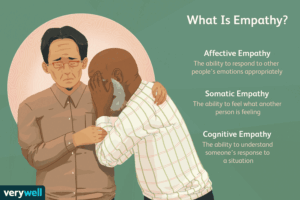
What makes self-understanding particularly compelling is its relationship to empathy and well-being. Self-understanding serves as the foundation for understanding others—without awareness of our own emotional landscape, accurately perceiving another’s inner world becomes nearly impossible. The philosopher Søren Kierkegaard captured this lifelong journey: “Life can only be understood backwards, but it must be lived forwards.” Self-understanding enables us to recognise when we are acting from conditioned patterns rather than genuine choice. It also creates the crucial pause between stimulus and response—the space where conscious choice becomes possible rather than reaction being automatic. This “response flexibility” allows individuals to act in alignment with values rather than being driven by unconscious habits.
Self-understanding represents the lifelong journey of turning inward to discover who we truly are—not as a fixed destination but as evolving awareness that enables us to live with greater authenticity, extend genuine empathy to others, and meet life’s challenges from a place of grounded self-knowledge, ultimately reminding us that the examined life, as Socrates declared, is the only one worth living.