






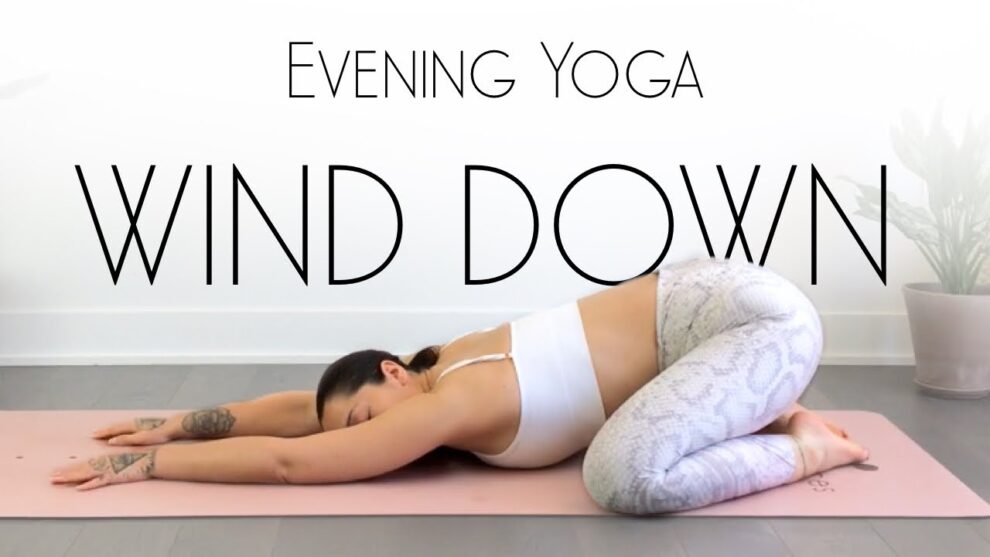


Gentle evening yoga helps settle the nervous system and supports restful sleep. A 2025 review found that even 1–2 yoga sessions per week reduced insomnia severity by 13.66%, with short‑term practice (≤6 weeks) improving sleep quality by 9.41% and long‑term practice (≥17 weeks) improving sleep in 100% of studies. A 2026 trial comparing morning vs. evening tele‑yoga reported that evening yoga uniquely reduced sadness, while both formats enhanced quality of life and psychological health.
Calming Evening Poses
- Legs‑Up‑the‑Wall: Lying on your back with legs extended up a wall promotes circulation and triggers the relaxation response.
- Child’s Pose: Kneeling and folding forward releases lower‑back tension and quiets the mind.
- Supine Twist: Drawing knees to the chest and gently rotating each side releases spinal tension.
- Corpse Pose with extended exhale: Lying flat with a slow, steady breath—4‑second inhale, 8‑second exhale—activates the parasympathetic (“rest‑and‑digest”) nervous system.
Yoga Nidra for Deep Rest
Yoga Nidra (“yogic sleep”) is a guided, supine meditation that produces deep physiological rest. Studies show it reduces sleep‑onset latency, increases total sleep time, and lowers stress, anxiety, and depression. Neuroimaging indicates increased dopamine release in the ventral striatum during Yoga Nidra, a neurochemical signature of reward.
Evening Yoga Practice is to be –
- A single 60‑minute evening vinyasa session, which does not impair sleep, making evening yoga safe for people with insomnia.
- The most robust sleep benefits which come from long‑term practice (≥17 weeks), but even 1–2 sessions a week improve insomnia severity and sleep quality.
For best results, practice 10–20 minutes nightly, ideally 30–60 minutes before bed. Always consult a healthcare provider before beginning any new exercise routine.